History of Nerja: From the Cave to Verano Azul, Date by Date
Nerja’s history in order: the cave and its 40,000 years, Andalusi Narixa and its silk, the sugar mills, the 1884 earthquake and the Balcón de Europa, and the 20th century of the cave and Verano Azul.
Nerja has a much longer history than its fame as a resort suggests: people have lived in the Nerja Cave for more than 40,000 years, it was an Andalusi village that worked silk, it was reborn in the late 16th century thanks to its sugar mills and, in the 20th century, it went from crisis to being one of the best-known names on the Costa del Sol thanks to the cave and Verano Azul. Here it is in order, with the key dates and the places where you can still see it.
Nerja in ten dates
- Over 40,000 years ago: the first human occupation of the Nerja Cave.
- 10th century: after the revolts led by Umar ibn Hafsun, Abd al-Rahman III forces the mountain population down to the plain; the villages of Nerja (Narixa) and Maro are born.
- 1487: the Catholic Monarchs conquer Nerja and Maro, which come under Vélez-Málaga.
- Around 1585: Felipe de Armengol builds the Maro sugar mill and resettlement begins.
- 1697 and 1720: the first phase of the Iglesia de El Salvador and the Ermita de las Angustias are completed.
- 1810–1812: during the Peninsular War, British troops blow up the Castillo Bajo and La Torrecilla.
- 25 December 1884: the Andalusian earthquake; in January 1885 King Alfonso XII visits Nerja and, as tradition has it, names the Balcón de Europa.
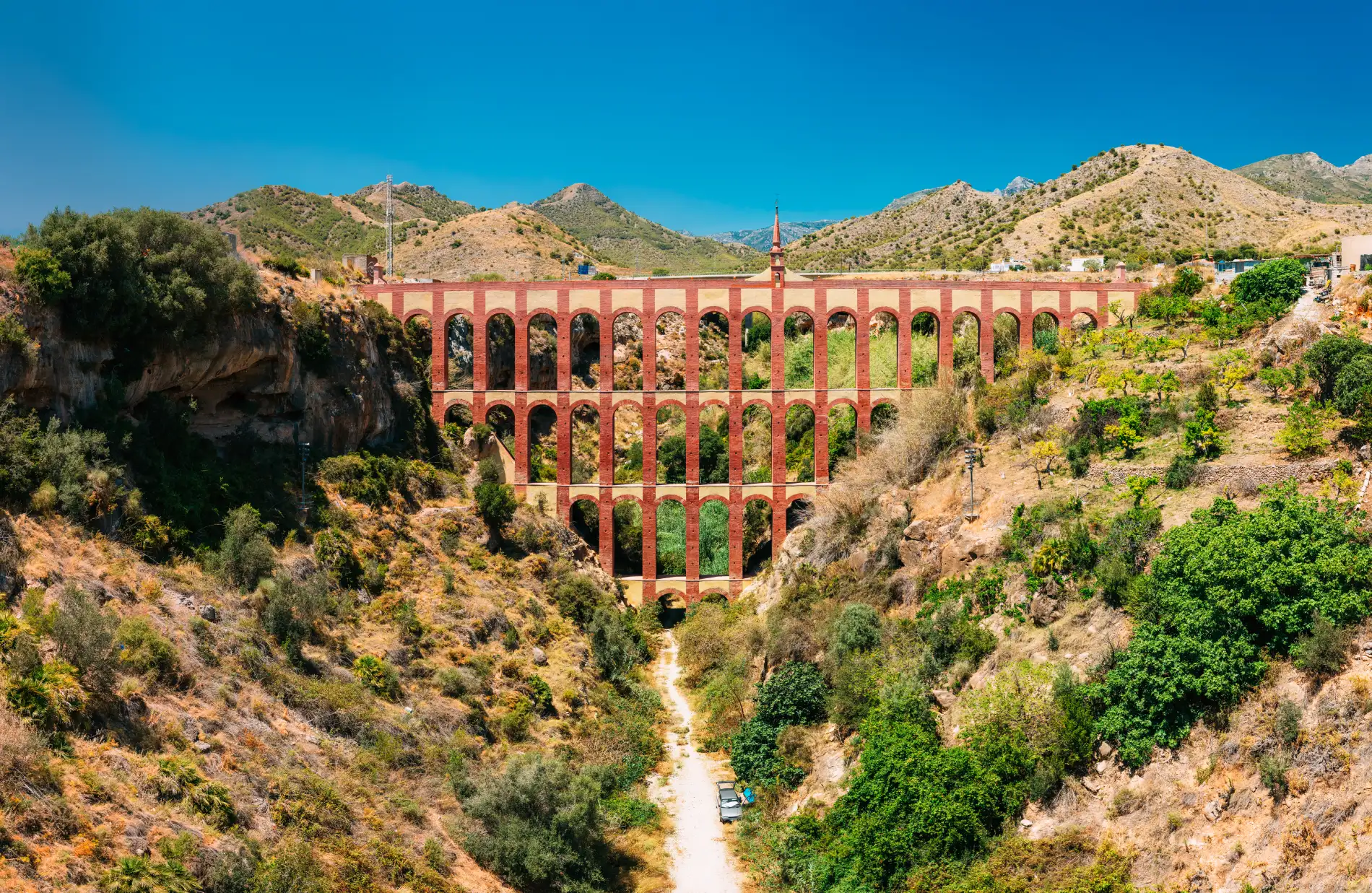
- Around 1880: the Acueducto del Águila is built for the San Joaquín sugar factory.
- 12 January 1959: five young men discover the Nerja Cave, which opens to the public on 12 June 1960.
- 1979–1982: Verano Azul is filmed and broadcast.
Prehistory: the Nerja Cave
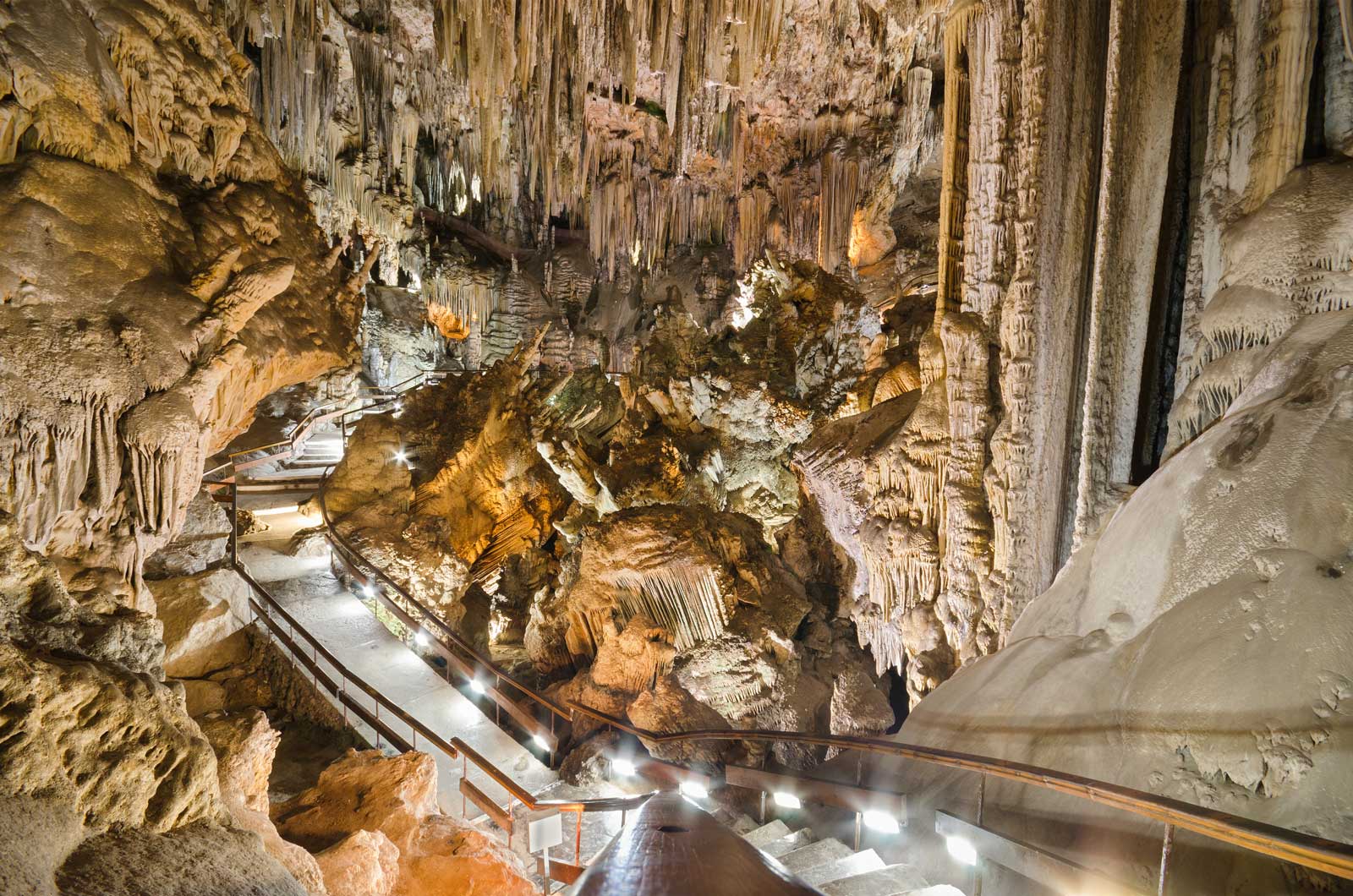
The story begins underground. The Nerja Cave has revealed human occupation spanning more than 40,000 years, up to the Copper Age: paintings, burials, tools and remains of what its inhabitants ate. In 2012 organic remains associated with paintings of seals were dated to about 42,000 years ago; if the link is confirmed, they would be among the oldest known paintings. At the Nerja Museum you can see “Pepita”, the skeleton of a young woman from more than 9,900 years ago found in the cave, with a reconstruction of her face.
Outside the cave, hut foundations from the Middle Bronze Age were found at the Tragalamocha site. Their descendants traded with the Phoenicians, drawn by the iron and lead of the Tejeda and Almijara mountains.
Roman times: Detunda and the coast road
In Roman times the area was a key stretch of the road linking Malaca (Málaga) with Sexi (Almuñécar). At La Coladilla, next to the Acueducto del Águila, a section of that road survives, and along it stood villas such as Los Cancharrales and El Lugarejo. Historians place the ancient Detunda, a small trading post on that road, at Maro.
Al-Andalus: Narixa, the “abundant spring”
In Visigothic times the population took refuge high in the mountains. After the arrival of the Arabs and Berbers, those settlements joined the revolts of Umar ibn Hafsun against Córdoba (from 880), with fortresses such as Los Castillejos and La Ladera del Aprisco. When the emir Abd al-Rahman III subdued them in the 920s, he forced their inhabitants down to the plain: that is how the villages of Nerja and Maro were born, on different sites from today’s.
Its Andalusi name, Narixa, is linked to the abundant water of its springs. Besides farming, Nerja lived from silk: the poet Ibn Said praised it for its striped tiraz, a silk fabric embroidered with gold and silver thread.
15th and 16th centuries: conquest, abandonment and sugar
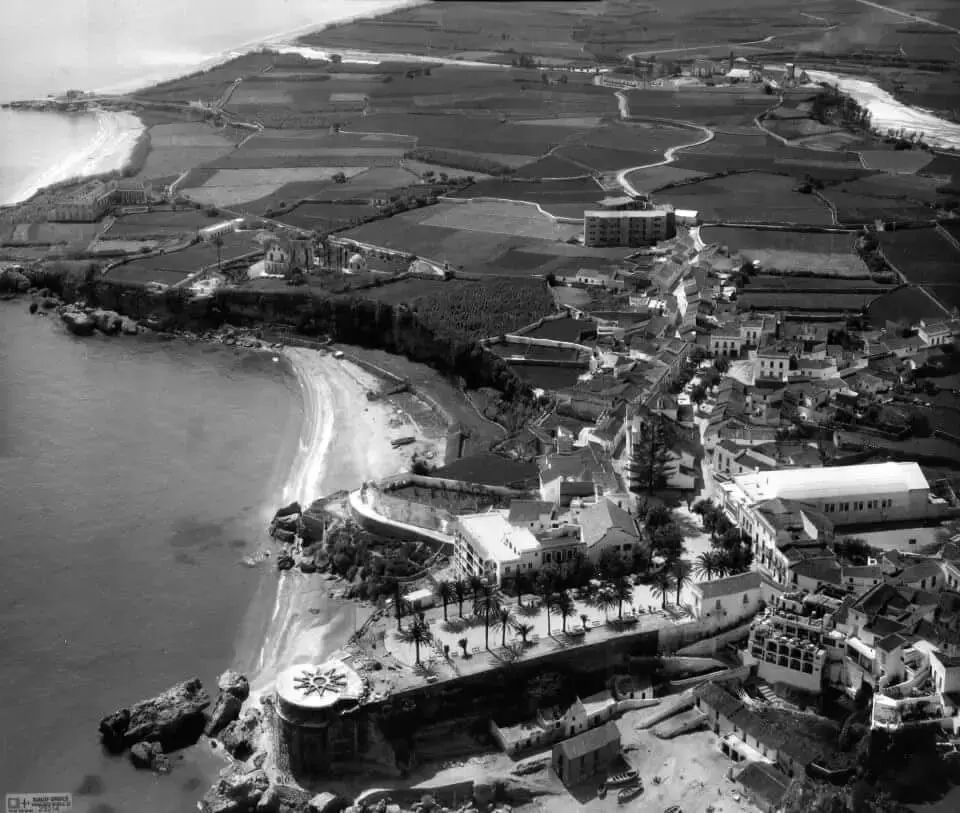
In 1487 the Catholic Monarchs conquered Nerja and Maro, which came under the council of Vélez-Málaga. The coast was dangerous because of Barbary raids, and neither royal privileges nor the castle built by order of Queen Joanna I, where the Balcón de Europa stands today, could attract settlers. The two villages were abandoned.
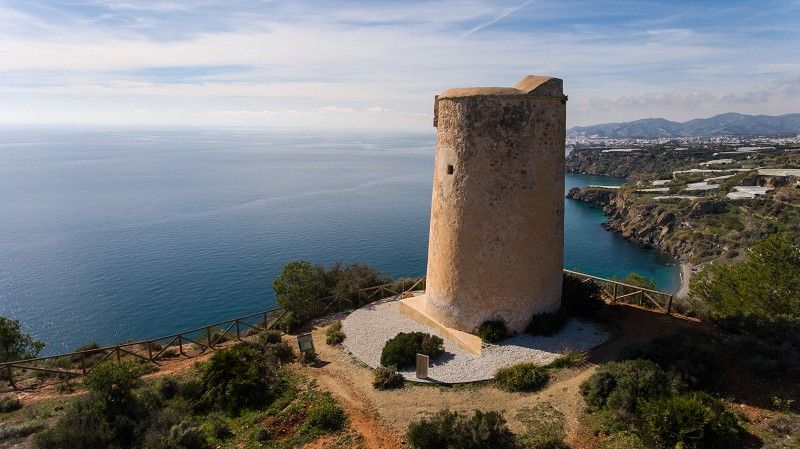
The change came with sugar cane. Around 1585 Felipe de Armengol, lord of Maro, built a sugar mill there, and soon afterwards another was built in Nerja by the river Chíllar (San Antonio Abad). The mill workers settled around them, on different sites from the old villages: that is how today’s Nerja and Maro were born. Watchtowers such as the Torre de Maro were built to guard the coast.
17th and 18th centuries: the town grows
Nerja grew around the new castle. In 1697 the first phase of the Iglesia de El Salvador was completed; it was enlarged in the 18th century. That century was one of growth: new neighbourhoods, new sugar mills and the Ermita de las Angustias (1720), whose wall paintings are attributed to the school of Alonso Cano; today it is a listed heritage site (BIC).
19th century: war, earthquake and sugar factories
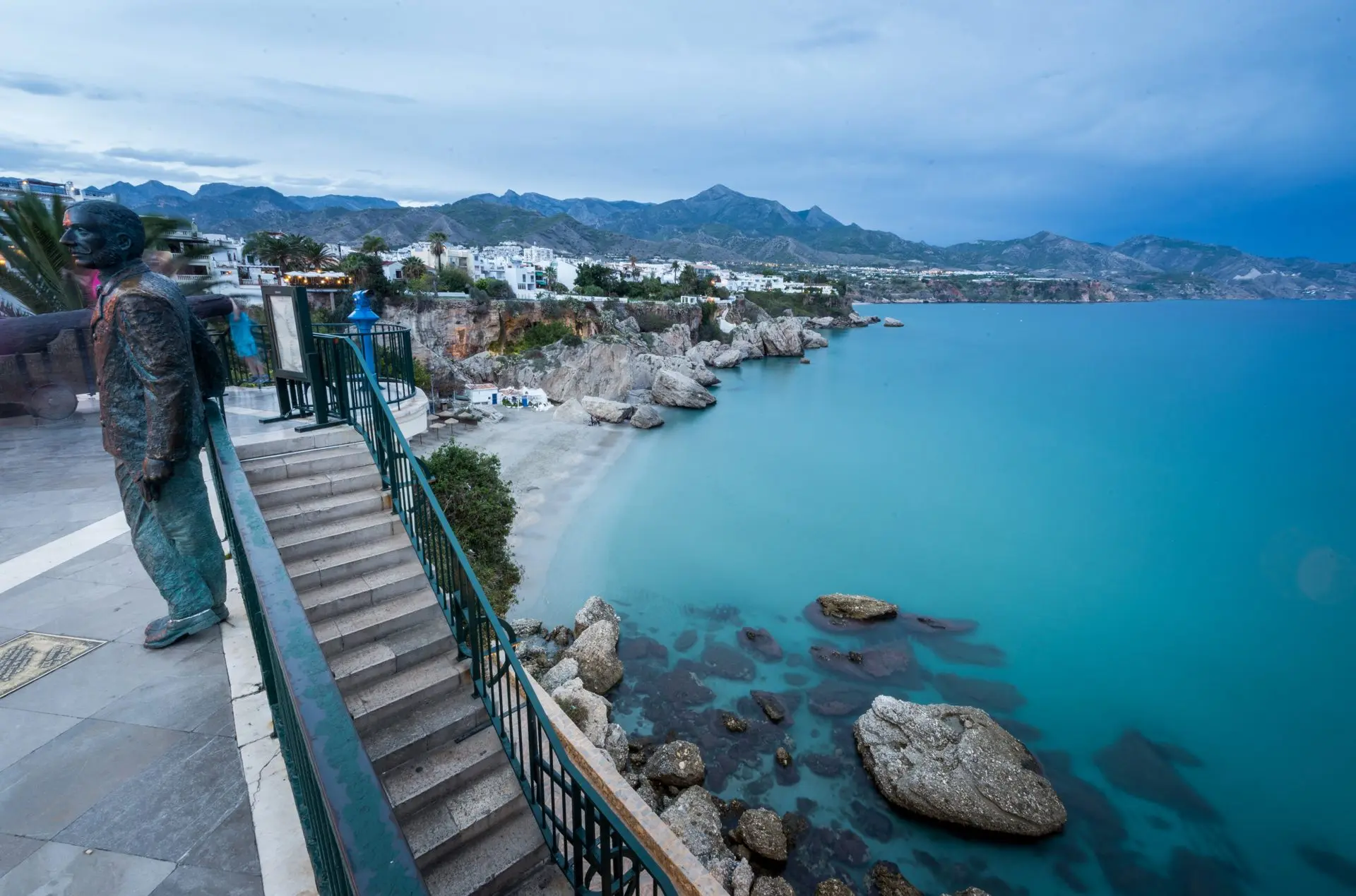
During the Peninsular War, British troops blew up the Castillo Bajo and La Torrecilla so that the French could not use them. What remained of the castle was the headland that, turned into a promenade, is now the Balcón de Europa.
On 25 December 1884 a great earthquake shook Málaga and Granada. In January 1885 King Alfonso XII visited the area and, as tradition has it, on looking out from the viewpoint said it was “the balcony of Europe”. His statue on the railing, unveiled in 2003, recalls the moment.
The economy was still sugar. Joaquín Pérez del Pulgar created the Las Mercedes farming colony, with the San Joaquín factory, supplied with water by the Acueducto del Águila, built around 1880 by the Nerja master builder Francisco Cantarero. In 1870 Vicente Martínez Manescau founded the San José factory at El Chaparil; he soon sold it to Martín Larios, and it became the most important in the area. The end of the century brought crisis: pests ruined the vineyards, sugar and raisin prices fell, the Maro mill closed after a fire and many people from Nerja emigrated to the Americas.
20th century: from crisis to tourism
The first years of the century were hard, with unemployment, droughts and epidemics. In 1930 the Larios family bought the San Joaquín factory. During the Civil War, in February 1937, thousands of people fleeing Málaga for Almería passed along the coast road under bombardment, in the exodus known as “la Desbandá”.
The big turning point came on 12 January 1959, when five young men from the town discovered the Nerja Cave. It opened to the public on 12 June 1960 with a ballet in the Sala de la Cascada, the origin of the Cave Festival; in 1961 it was declared a Historic-Artistic Monument and in 2006 a Bien de Interés Cultural as an archaeological site. In 1965 the Parador opened, and in 1968 the San José factory closed; its buildings now house the El Chaparil secondary school. Our sugar route visits what remains of that era.
In 1979 and 1980 Verano Azul was filmed in Nerja and broadcast by TVE in 1981–1982. The series made the town known all over Spain and in many other countries, and it is remembered today in the Parque Verano Azul, with the replica of Chanquete’s boat, and in the statue of Chanquete.
Where to see Nerja’s history today
- Nerja Museum (Plaza de España): from prehistory to Verano Azul, with “Pepita”.
- The Nerja Cave, in Maro.
- The Balcón de Europa, on the site of the old Castillo Bajo, with the statue of Alfonso XII and the cannons.
- The Iglesia de El Salvador and the Ermita de las Angustias.
- The Acueducto del Águila and the Maro sugar factory (seen from outside).
- The Torre de Maro and the Torrecilla viewpoint.
Frequently asked questions
What does the name Nerja mean?
It comes from the Andalusi Narixa, which is linked to an abundant spring.
When was Nerja founded?
The Andalusi village was born in the 10th century, when Abd al-Rahman III forced the mountain population down to the plain. Today’s town took shape in the late 16th century around the sugar mills.
Why is it called the Balcón de Europa?
According to tradition, because of the words of King Alfonso XII when he looked out from the viewpoint in January 1885, after the 1884 earthquake.
When was the Nerja Cave discovered?
On 12 January 1959, by five young men from the town. It opened to the public on 12 June 1960.
Sources: historical overview on visita.nerja.es (Nerja Town Council and Málaga Provincial Council), Nerja Town Council, Nerja Cave Foundation and the Andalusian Government (Decree 194/2006).
¿Te ha resultado útil este artículo?
Valora este artículo para ayudar a otros visitantes.